

Part 1
This is where it started. The usual black loops, no plan, hands moving fast across the paper the way they do in every piece in my recent series, generating a figure through repetition rather than intention.
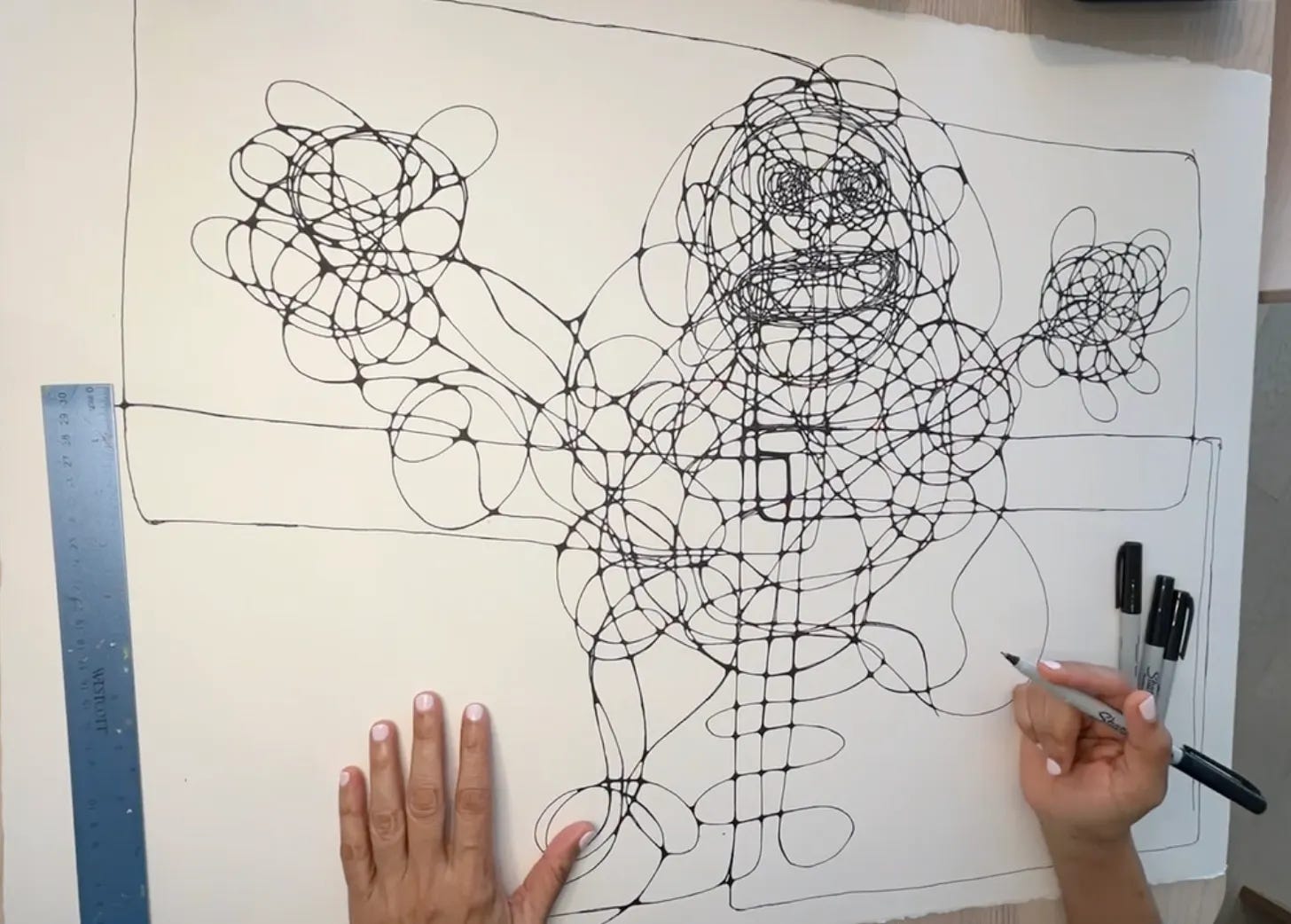
And somewhere in the middle of making those loops, before I’d decided to make anything at all, I looked at the tangle and saw a sort of lopsided face, eyes crossed like they’d been startled into that position, mouth gaping, hands like mitts… and was that a wedding dress and veil around her head…? The unplanned had produced something I hadn’t planned to see, and now I couldn’t unsee it.
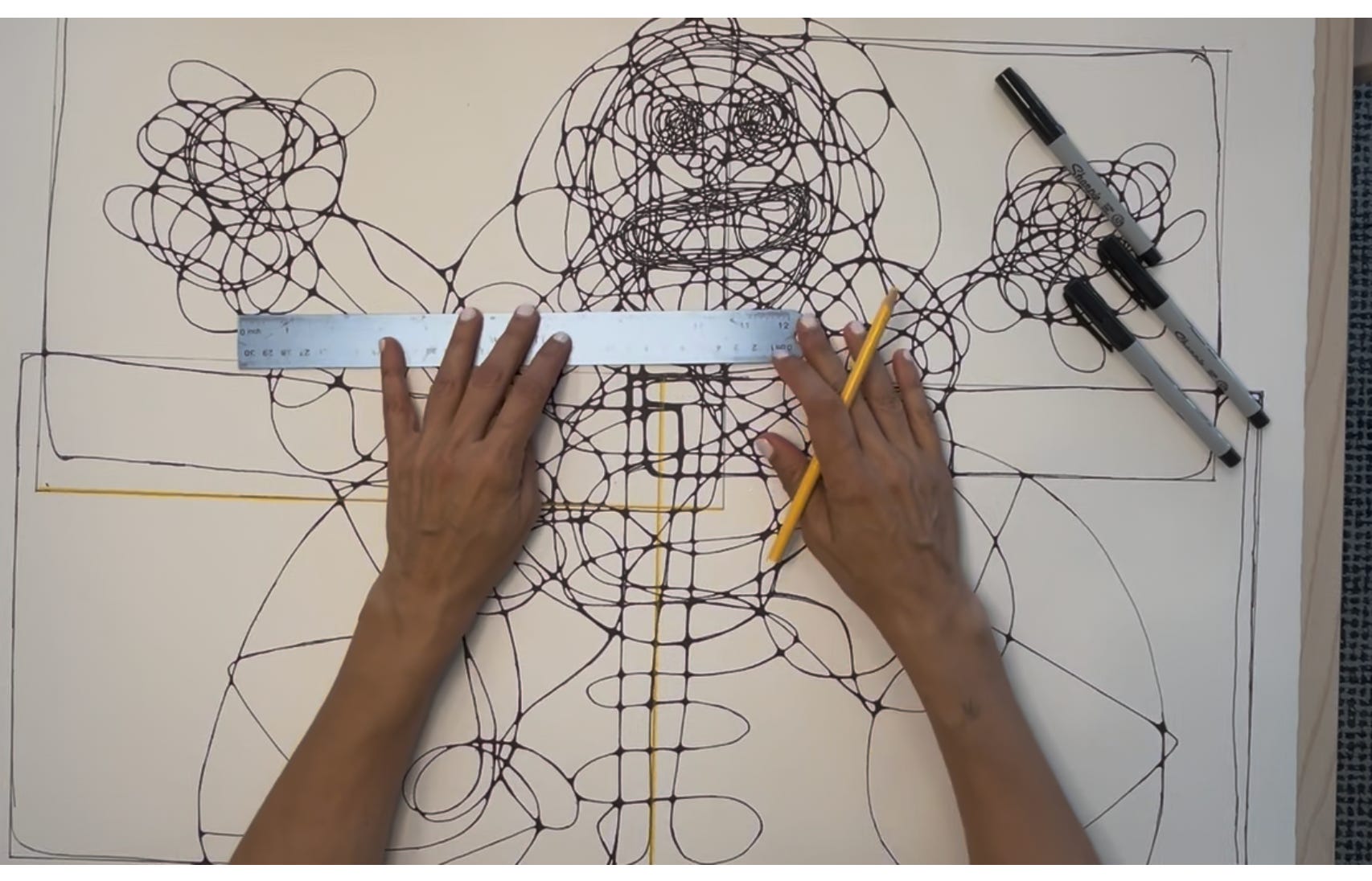
I had a visceral reaction, sick, unbidden, to a face and a wedding dress surfacing out of pure loop-work, and a ruler is the first thing I reached for afterward. I imposed straight lines, and it wasn’t a compositional choice. It was a control response. The unplanned had just done something I hadn’t authorized: produced a recognizable, upsetting (to me) image out of what was supposed to be pure gesture, and the grid was me re-asserting authorship over material that had briefly gotten away from me.
I wanted this awful woman to live in a box.
Nota bene: a grid didn’t add anything but it contained it. I took perceived existing chaos and laid a coordinate system over it because then she was broken into pieces and I could address her quadrant by quadrant, cell by cell. That’s exactly what the cloisonné color did next, going back into each contained space and assigning it a value.
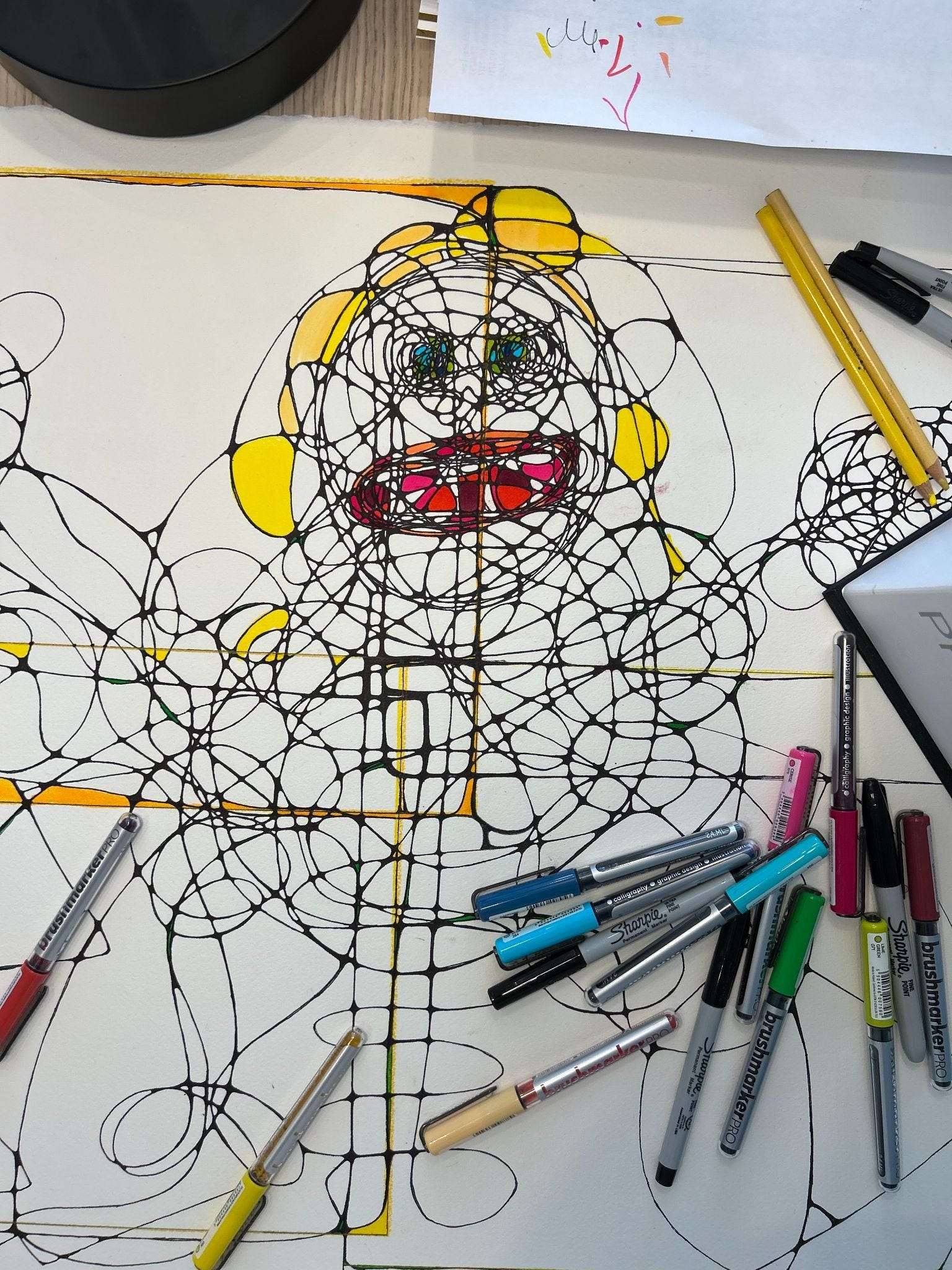
I knew, suddenly and without much interest in examining why, what I wanted to do with her: make her as ugly on the outside as I was inexplicably convinced she must be on the inside. Not a considered idea. A reflex. She was an intruder, and something in me decided, instantly, that she deserved to be exposed. You want to be recognized? I’ll make you recognizable not as a bride but as a bridezilla. A monster.
It took longer than it should have to notice who I was actually drawing. The dress was fantasy, but the woman wearing it is specific. The distinction matters more than it might seem. I didn't dream up a stranger and happen to notice a resemblance. It turned out I'd taken someone specific, someone real, and dressed her in a costume of my own invention, so I'd have somewhere legitimate to put what I felt. The cupcake dress, the cake-topper stiffness, none of that belongs to her. That's my invention. But the woman inside it is not a composite and not a symbol. Who she is doesn’t belong in this piece but what I did with her does. The unplanned loops didn't produce someone I needed to invent from scratch, they produced someone I'd been carrying around already, my feelings about whom unconsciously asked for a place to land.
Part 2
These images are of the cloisonné phase, thin black outlines holding pools of flat color, yellow hair, then eyes, then mouth, red and angry and then torso, a wash of yellow-green watercolor soaking the background last. By the time the cells of her face and torso were filled, I thought this part of the painting was resolved. A woman whose character shows up plainly on her twisted face, still in her wedding dress was exactly what I’d set out to make.
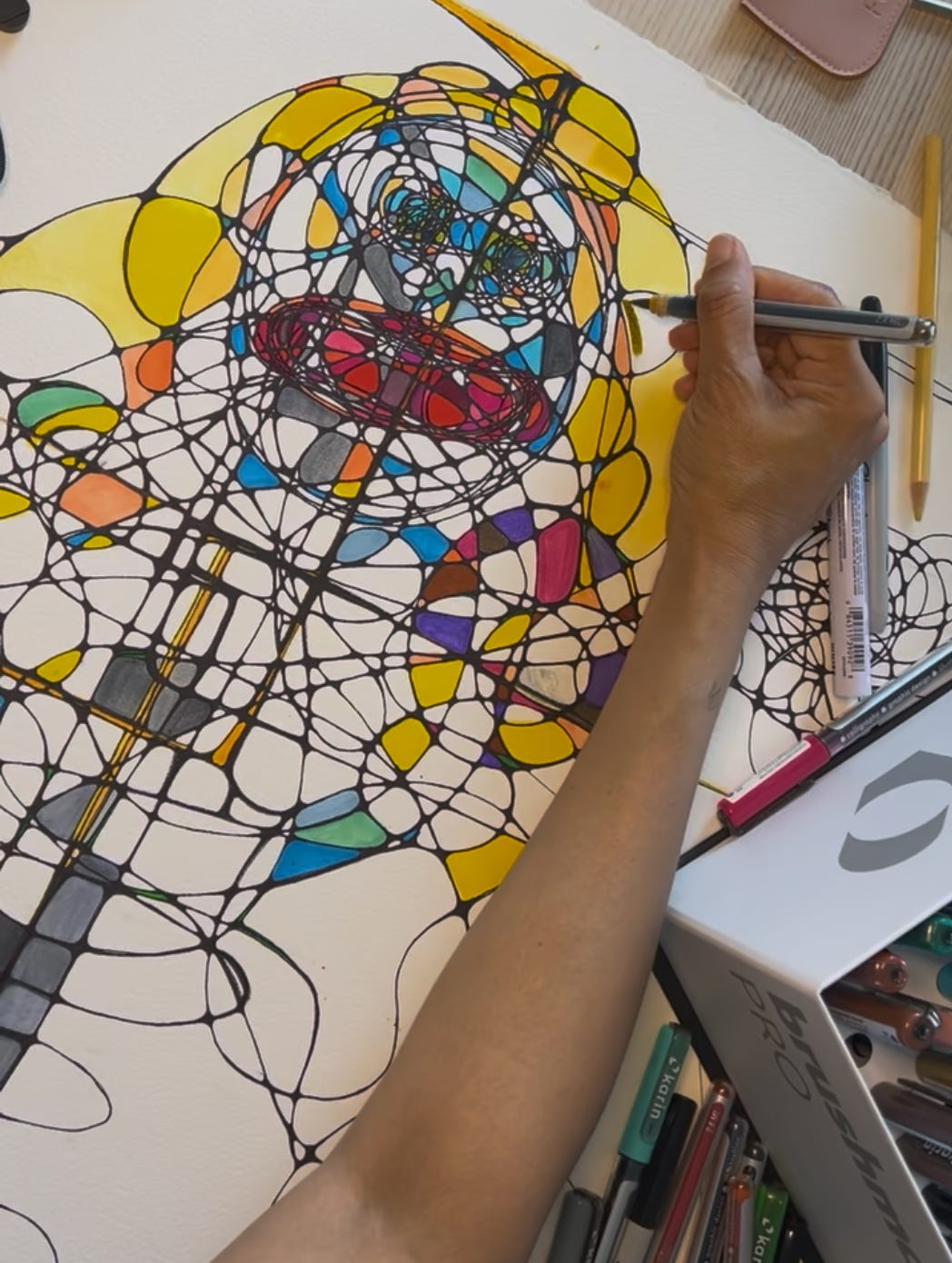
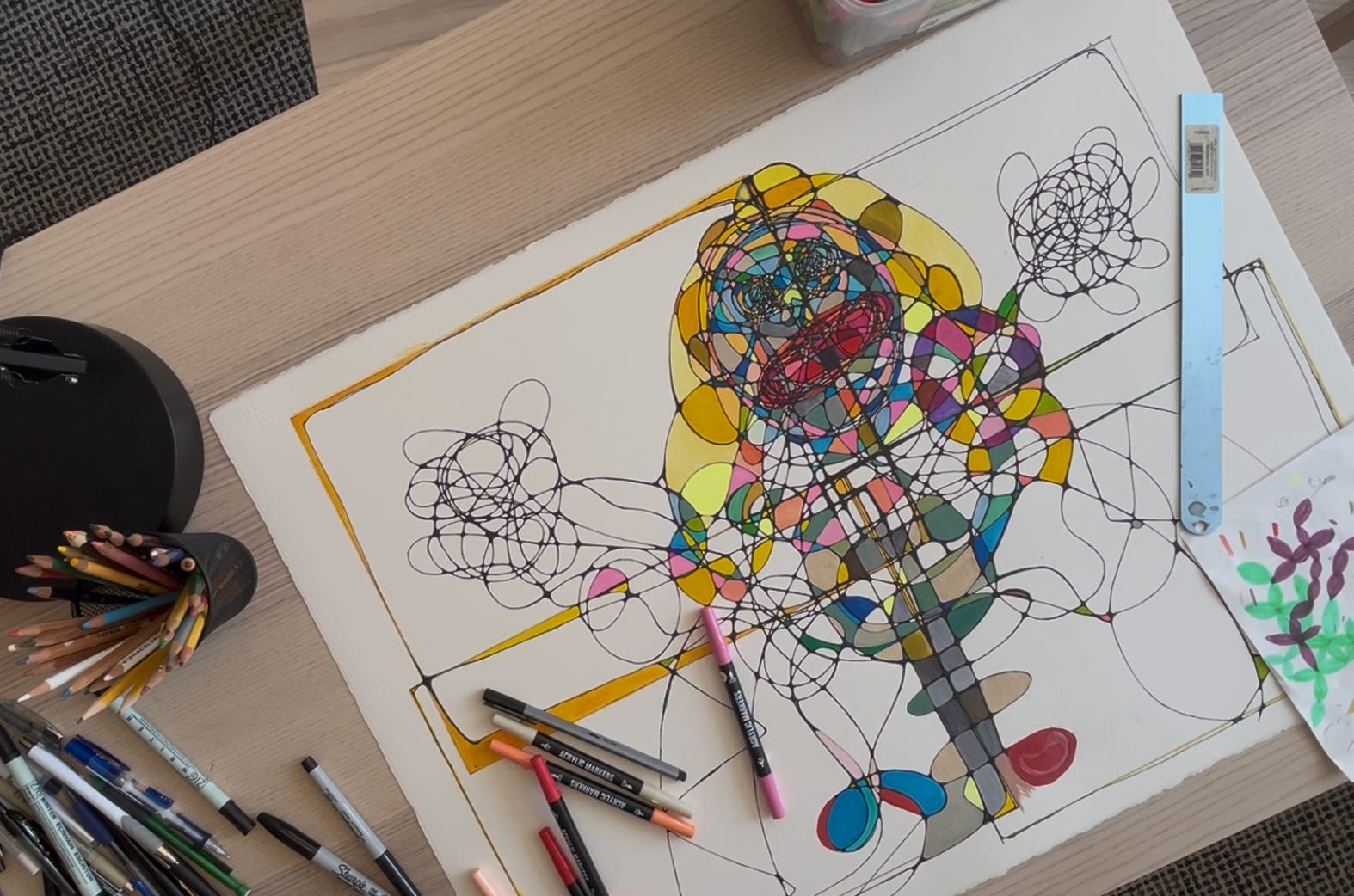
I leaned into the color to create not a mouth shaped for speaking but a red maw for pulling things toward it. If a black hole is absence that consumes, this is saturation that does the same.
Part 3
I had blindly obeyed my sudden nauseated certainty about this woman’s interior life - that it was twisted, ugly, all consuming, and now that it was sitting on the page looking finished it didn’t feel true. Yes, she was hideous and kind of terrifying to look at, but the whole transaction had been too clean and easy. I’d decided she was rotten inside and then simply painted rotten on the outside to match. It might have been technically resolved, but it wasn’t integrated.
I’ve thought about and worked on integration, in that sense, for years. Making the outside match the inside is ongoing work, and it takes real nerve to destroy parts of a life that no longer fit, and then to rebuild without knowing yet what you’re building. The goal, still unmet most days, is that the person I know myself to be and the person you meet are the same person.
And so it is with this piece: destroying parts that don’t fit to rebuild without knowing if it will be successful but unable to live with the current version. I painted white over the face I’d just spent many hours building. I re-outlined in black pen, then in white pen, until what came back in was nothing like a face at all except that it was in the space where a face might live. It was dense and cellular, and had a geological texture closer to a cross-section of stone than to a woman.
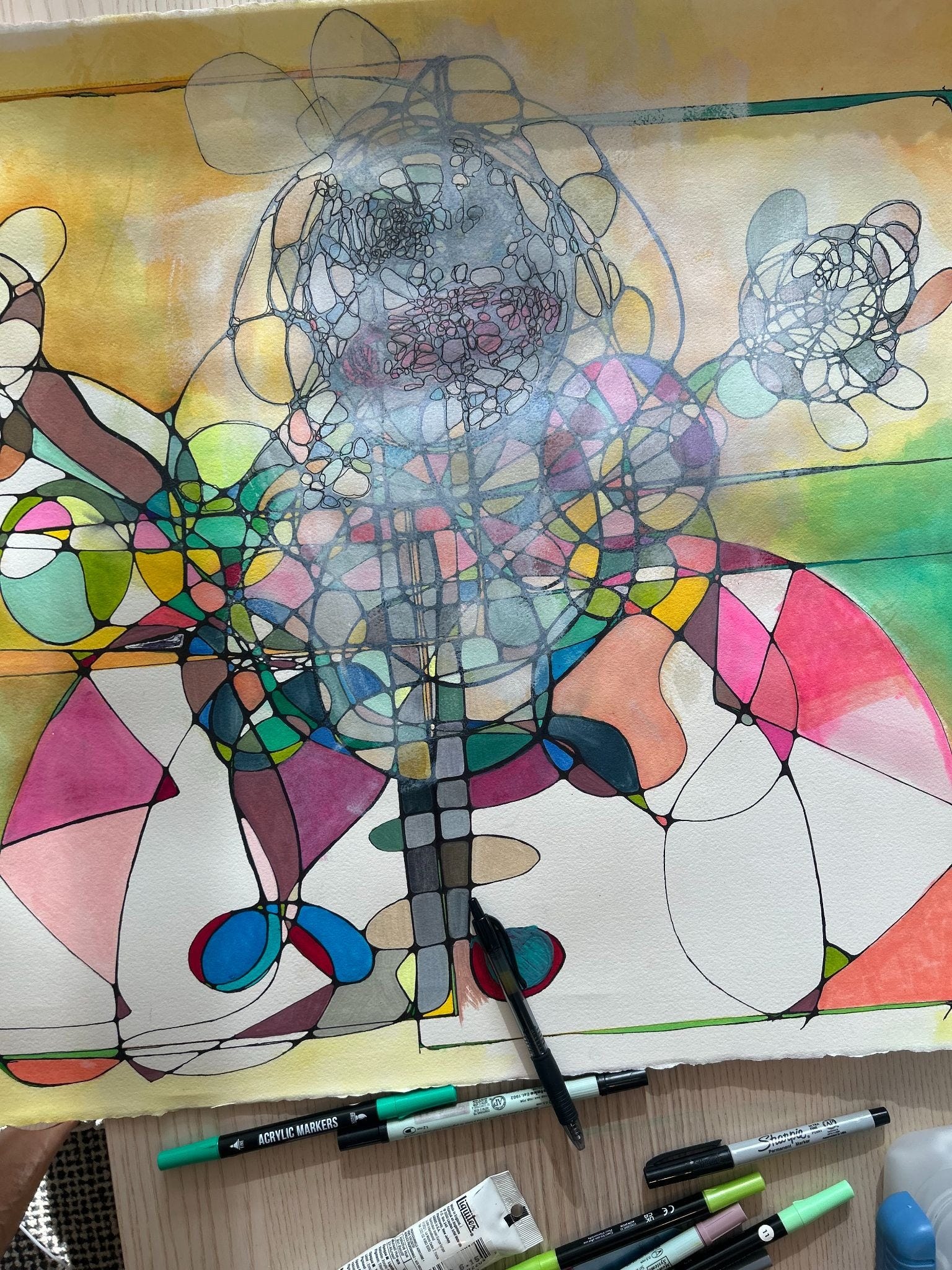
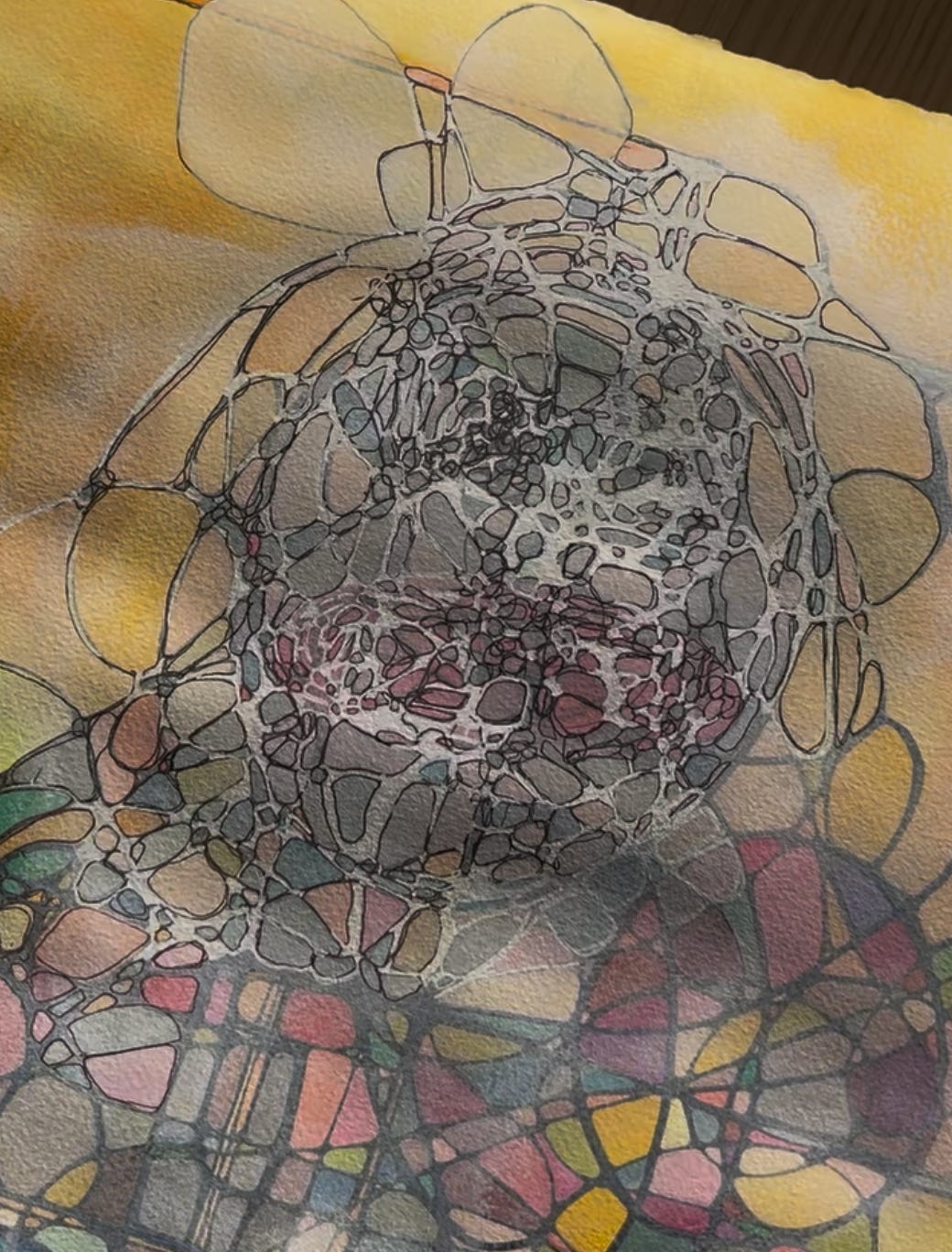
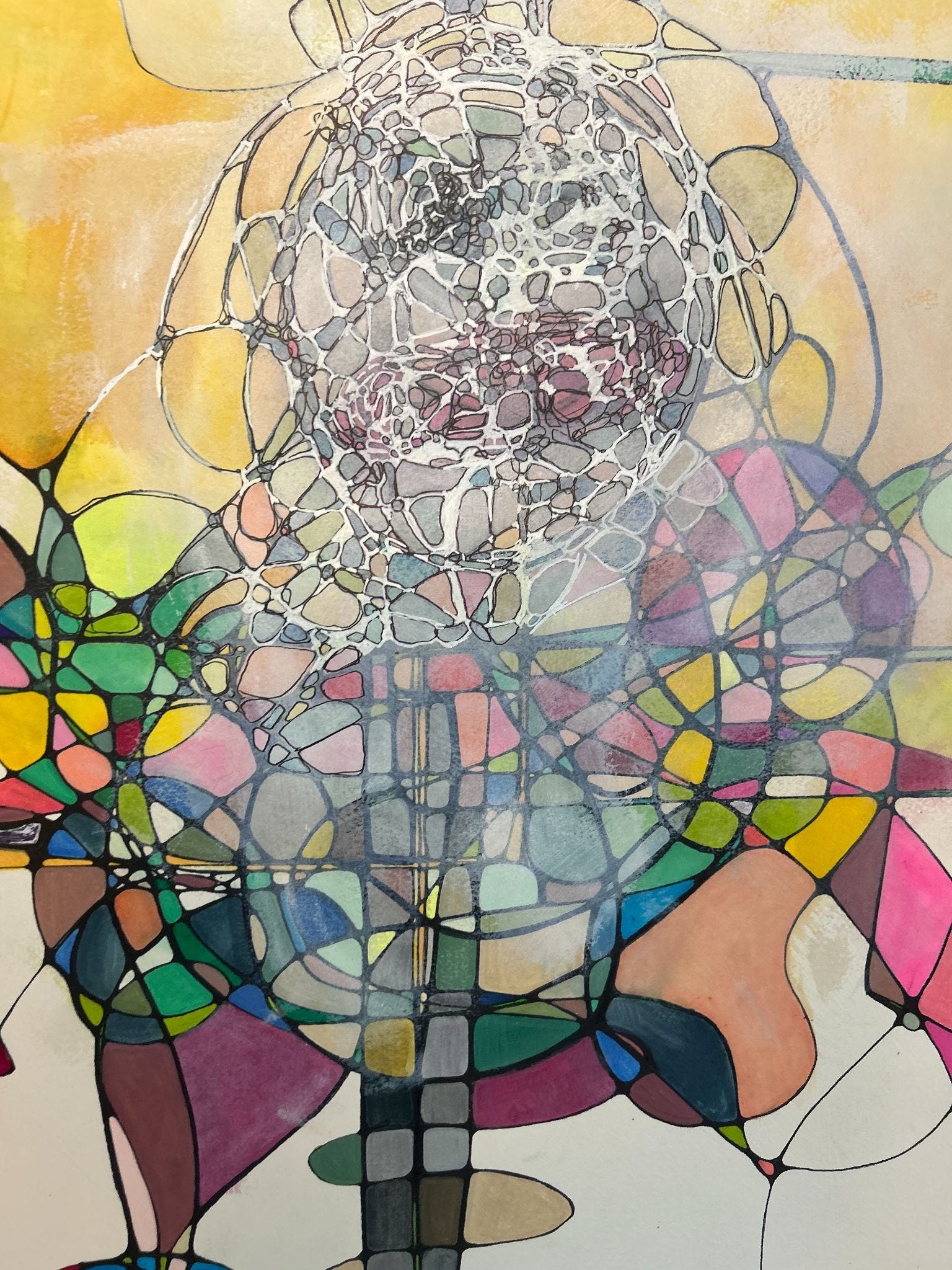
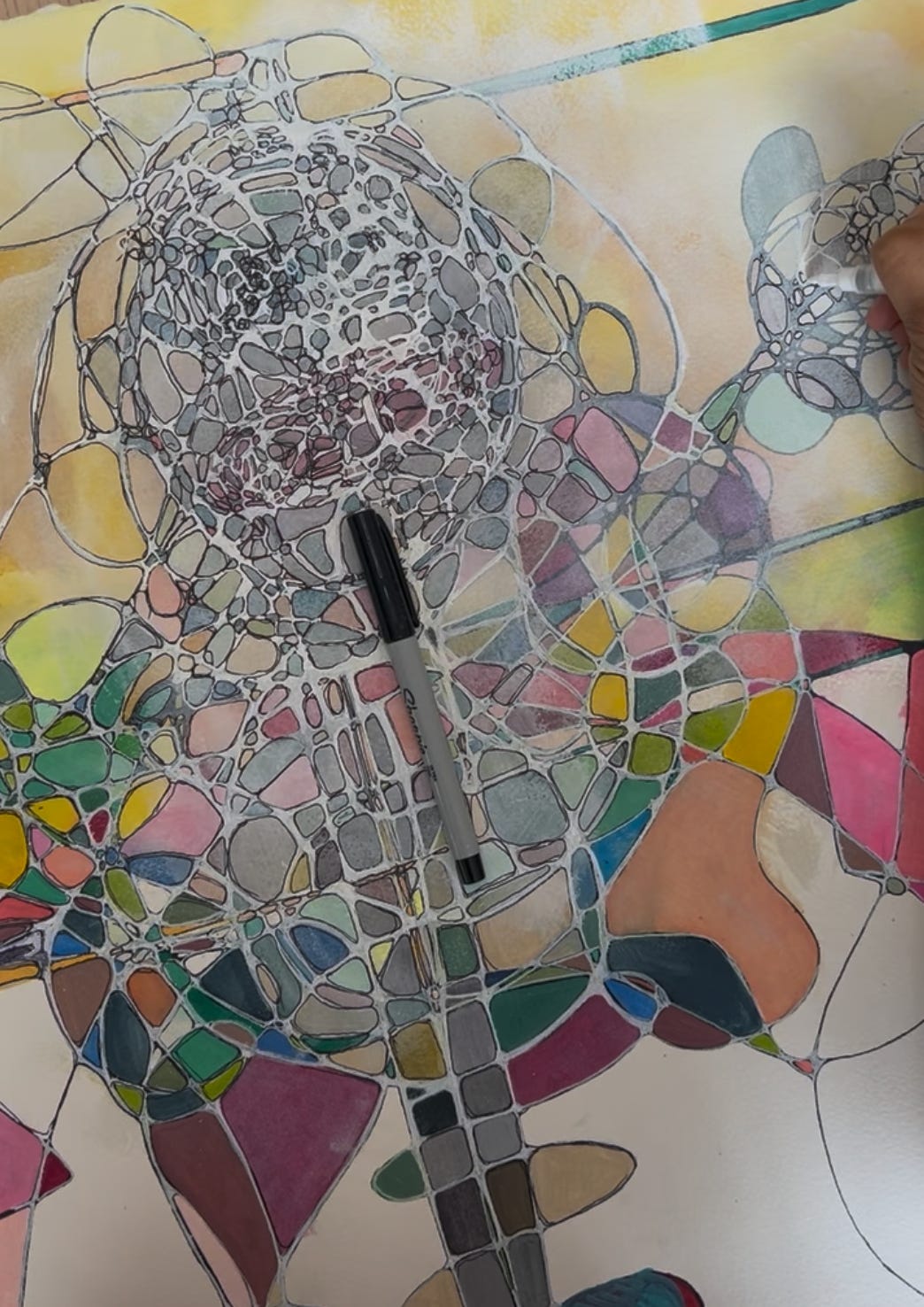
She was way more disturbing now, like some image I’d seen in childhood nightmares. What used to be a face was now a fist-sized knot of gray and white cells, no eyes, no mouth, nothing you could point to and name. Now she looked the way my earlier, unexamined reaction might have actually warranted if I had taken a beat instead of rushing to illustrate it. Her ugliness was formless, less certain of itself than the earlier colorful version, and in being unrecognizable it became truly frightening because it was closer to reality.
In these last images, three periods of my own decision-making coexist on one page: raw loops in the hands, resolved cloisonné color in the torso, and where her face should be, something that is not so much ‘monster’ but ‘monstrous.’
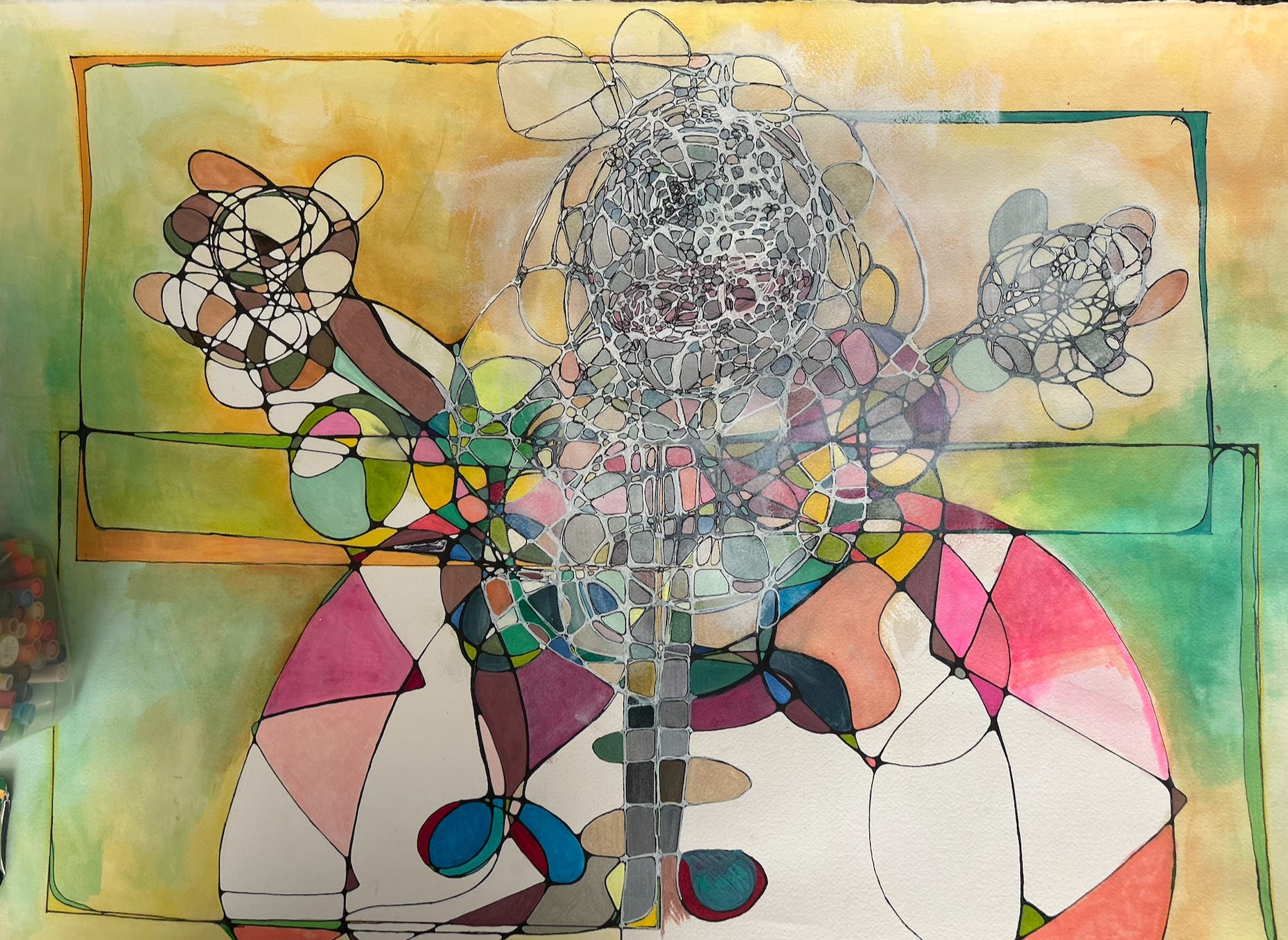
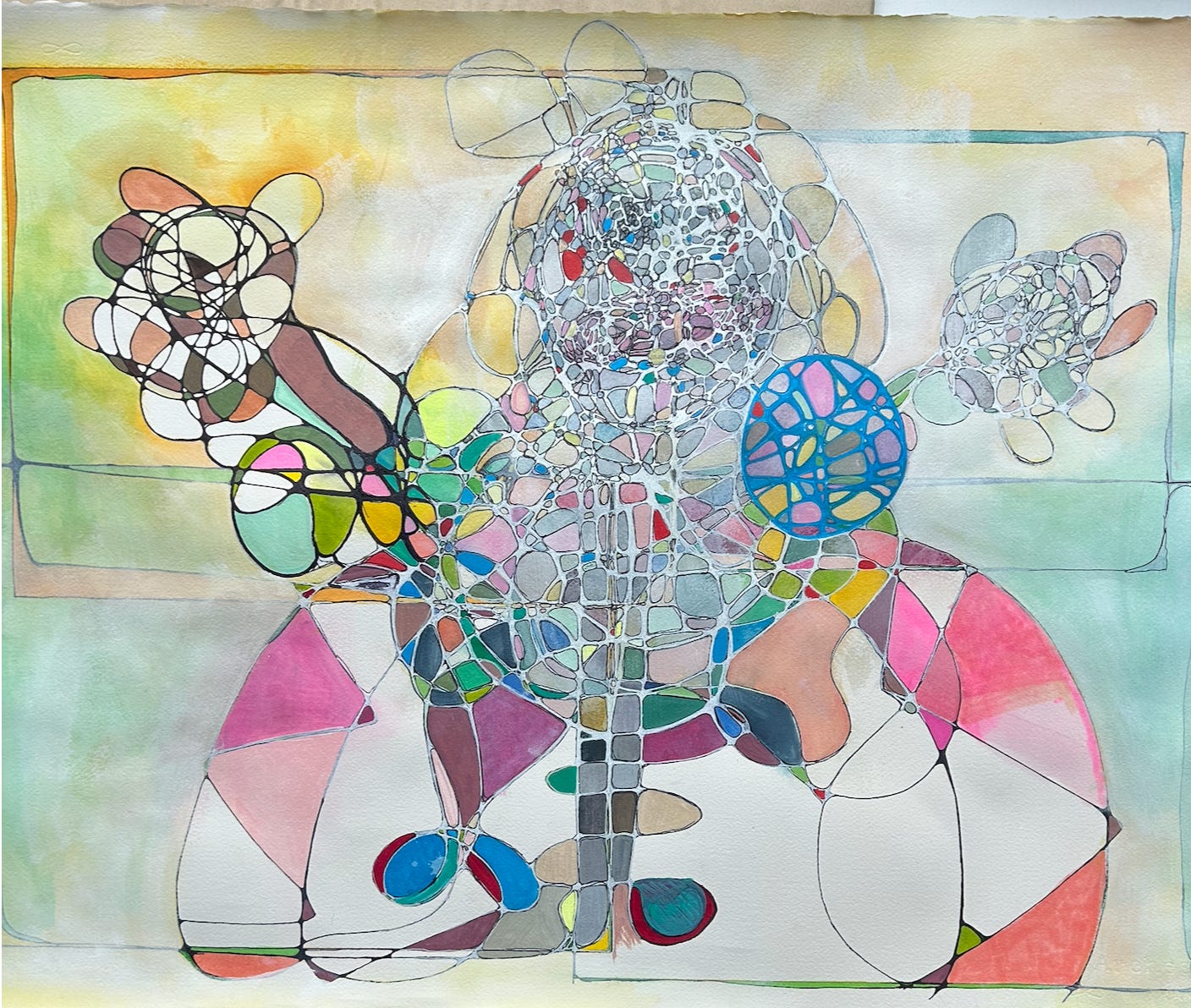
In the end, the painting and drawing over wasn’t a correction, per se. It was the retraction of the visual verdict I’d been only too happy to hand down fast. The final result achieves a certain integration of how I imagine this woman’s inner world and her appearance, and of my inner world and the work of making it visible.
Wow!